

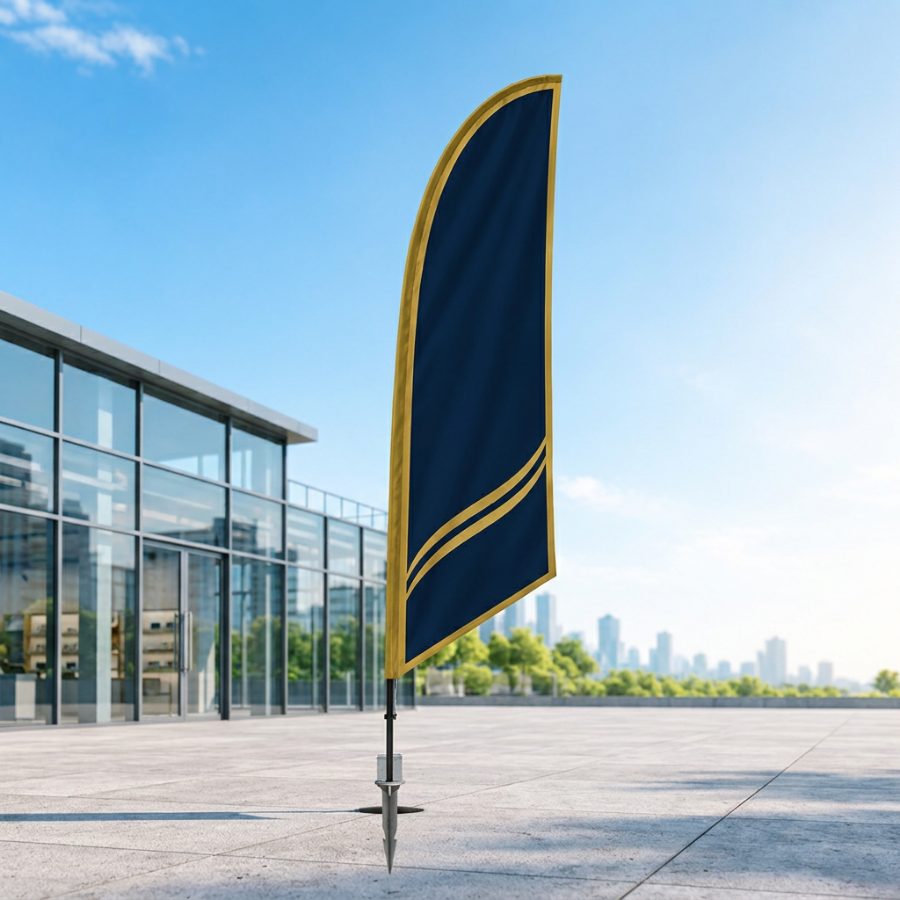
An advertising flag left outside in Dubai deals with more than most printed materials ever have to: direct sun for most of the year, sudden wind gusts between buildings, and dust that settles fast in a city this size. None of that means the flag needs replacing every few months. It means it needs the right material from the start, and a little care to get the most out of it.
Why the fabric matters more than the print
The biggest difference between a flag that fades within weeks and one that holds its colour for a year or more usually isn't the printing itself. It's whether the ink is dye-sublimated into the fabric or just sitting on the surface. Dye-sublimation on a UV-treated polyester bonds the colour into the weave, so it doesn't crack, peel or flake the way a surface print does once it's been in direct sun. That's the standard we print every outdoor flag on.
Keeping it stable in the wind
Most of the damage we see on outdoor flags isn't from the sun at all. It's a base that's too light for the flag's height, which lets it whip and tear at the seams in strong wind. A cross or water-fillable base adds the weight a tall flag needs to stay upright without stressing the fabric. If the flag is outdoors permanently, it's worth checking every few weeks that the base is still full and the pole hardware hasn't worked loose.
Simple maintenance that actually extends the life
- Bring the flag in overnight or during a sandstorm warning if it doesn't need to be up 24/7. UV exposure and airborne sand are the two biggest causes of early fading, and both do more damage when the flag isn't even doing its job.
- Fold the flag rather than crumpling it when storing, following the existing seams where you can, so new creases don't set into the fabric.
- Rinse off dust build-up with water rather than letting it grind into the weave in the wind. Avoid harsh detergents, since they can dull dye-sublimated colour faster than the sun does.
- Check the pole and base hardware for corrosion every couple of months if the flag is near the coast. Salt air affects metal fittings faster than it does further inland.
When to reprint rather than repair
A flag that's visibly faded, frayed at the fly end or has lost its shape is doing the opposite of its job. A tired flag reads as a tired business, even when everything else about the location is well kept. As a rough guide, an outdoor advertising flag on constant display in Dubai's climate is worth reviewing after 8–12 months; one that's brought in overnight or used seasonally can often go well beyond that.
Not sure if your current flag needs a reprint or just a wash? Send us a photo on WhatsApp and we'll give you an honest answer either way.